Smarter Accounting

SARS AUDITS

Are You On SARS’ Radar? The Hidden Reasons Your Business Gets Flagged Most SARS audits don’t happen by accident. They’re triggered. And in many cases, small business owners don’t even realise they’ve done anything that puts them on SARS’ radar — until it’s too late. If your books are not clean, your submissions are inconsistent, or your numbers don’t quite make sense, you may already be at risk. Let’s break down what actually triggers SARS attention — and what you can do about it. Common Triggers That Get Businesses Flagged SARS uses data, patterns, and comparisons. It doesn’t guess. Here are some of the most common red flags: Regular VAT refunds claimedIf you’re constantly claiming money back, SARS wants to verify why. Income doesn’t match expensesHigh expenses with low declared income raises immediate questions. Low profit, high lifestyleIf your financials say one thing, but your lifestyle suggests another — expect attention. Late or missing returnsEven one or two missed deadlines can put you on the radar. Payroll doesn’t match PAYE submissionsSARS cross-checks everything — and mismatches stand out quickly. Sudden spikes or drops in turnoverBig changes without explanation trigger reviews. 👉 These are not rare situations. Most businesses hit at least one of these at some point. What Happens When SARS Flags You This is where things slow down — and get uncomfortable. Once flagged, you can expect: A verification or audit request A demand for supporting documents Delays in refunds (sometimes indefinitely) Possible penalties and interest if errors are found And here’s the part most people underestimate: 👉 Even if you’re “mostly right”, poor records can still cost you. Because if you can’t prove it, SARS won’t accept it.   🛠️ How To Stay Off SARS’ Radar This is where most problems can be avoided entirely. Simple, but not optional: Keep your books up to date monthlyNot once a year when things are already messy. Reconcile properlyBank, VAT, payroll — everything must tie up. Submit on time, every timeDeadlines matter more than most people think. Don’t guess your numbersEstimates without proper backing create risk. Use proper systemsCloud accounting + structured processes = fewer mistakes. 👉 This is not about perfection — it’s about consistency and control.   💡 Already Been Flagged? Here’s What To Do First — don’t panic. But don’t ignore it either. The wrong response here can make things worse. Instead: Respond professionally and on time Gather complete and accurate supporting documents Make sure your records actually align with your submissions Fix any underlying issues properly — not just the symptoms 👉 This is where having the right support makes a massive difference. 🚀 Final Thought: It’s Easier To Prevent Than Fix Most audits we deal with could have been avoided with better structure upfront. But even if you’re already behind or flagged — it’s still fixable. The key is to deal with it early, correctly, and with a clear plan.   📩 Need Help Getting Back On Track? If you’re worried about SARS, behind on submissions, or unsure if your business is exposed — let’s take a proper look. No guesswork. No panic. Just a clear path forward. 👉 Get in touch:🌐 https://smarteraccounting.co.za📞 072 787 7700📧 david@smarteraccounting.co.za

SARS AUDITS Read More »

Fallen Behind with SARS? Here’s How to Fix It Before It Gets Worse

Introduction If you’ve fallen behind with your tax, you’re not alone. Many business owners and individuals miss deadlines, fall behind on submissions, or simply don’t know where to start. The problem is — SARS doesn’t forget, and penalties don’t stop accumulating. The good news? This is fixable — but the sooner you act, the better. How Do People Fall Behind? It usually starts small: Missed income tax returns (ITR12 or ITR14) Late or skipped provisional tax (IRP6) VAT returns not submitted Payroll submissions (EMP201/EMP501) not up to date Bookkeeping falling behind month by month Before long, it builds into a situation that feels overwhelming. What SARS Does (And Why It Gets Expensive) SARS is systematic — and strict. If you fall behind: Penalties are applied for late submissions Interest is charged on outstanding amounts SARS may raise estimated assessments (often higher than reality) Your compliance status can be negatively affected 👉 The longer it is left, the more expensive it becomes. What NOT to Do Many people make the situation worse by: Ignoring SARS correspondence Hoping it will “sort itself out” Submitting incomplete or incorrect returns Guessing figures just to get something filed 👉 This often leads to higher penalties and more complications What NOT to Do Many people make the situation worse by: Ignoring SARS correspondence Hoping it will “sort itself out” Submitting incomplete or incorrect returns Guessing figures just to get something filed 👉 This often leads to higher penalties and more complications. How to Fix It (Step-by-Step) Here’s the correct approach 1.Get a clear picture Understand exactly what is outstanding: Returns Taxes Penalties 2. Bring your bookkeeping up to date Everything starts here: Bank accounts reconciled Income and expenses correctly recorded Supporting documents in place   3. Submit outstanding returns properly Not rushed. Not guessed.👉 Correct and complete submissions reduce risk. 4. Review penalties and interest In many cases: Penalties can be reduced or reversed Payment arrangements can be negotiated 5. Stay compliant going forward Once fixed: Keep books updated monthly Submit on time Plan ahead for tax Why Acting Now Matters (Especially Right Now) We are moving into a critical period: Financial year-end just passed (February) Tax season is approaching (mid-year) Provisional tax planning becomes important 👉 Fixing issues now puts you back in control before pressure builds again. Need Help Getting Back on Track? If your tax or bookkeeping is behind, we can help you: Catch up outstanding returns Clean up your books Deal with SARS correctly Reduce penalties where possible Get you fully compliant again 📞 WhatsApp: 082 061 2300📩 david@smarteraccounting.co.za🌐 https://smarteraccounting.co.za/ Smarter Accounting — Where Results Matter

Fallen Behind with SARS? Here’s How to Fix It Before It Gets Worse Read More »

Capital Gains Tax (CGT) Update – How You Could Save Up to R180,000 on Your Property

The 2026/27 South African Budget introduced an important change for entrepreneurs and growing businesses. From 1 April 2026, the compulsory VAT registration threshold increases from R1 million to R2.3 million turnover over any 12-month period. For many small businesses, this provides much-needed breathing room before VAT registration becomes mandatory, reducing administrative pressure while businesses focus on growth. What the New VAT Threshold Means – The increase in the VAT threshold is particularly positive for small and medium-sized businesses. Benefits include: More time to grow before compulsory VAT registration Reduced administrative pressure in early growth stages Greater flexibility with pricing and cash flow More time to establish proper accounting systems Less risk of unexpected VAT compliance issues This change is especially beneficial for industries where turnover can increase quickly, such as: Construction and building contractors Maintenance and trade businesses Consulting and professional services Small manufacturing and project-based businesses Growth Can Happen Faster Than Expected South Africa’s 2026/27 Budget has introduced a meaningful tax benefit for homeowners. The primary residence Capital Gains Tax (CGT) exclusion has increased from R2 million to R3 million, creating a real opportunity for individuals to reduce — or even eliminate — CGT when selling their home. For many taxpayers, this is not just a technical adjustment — it’s real money saved.   What Has Changed? Key CGT updates include: Annual capital gain exclusion increased to R50,000 Primary residence exclusion increased to R3,000,000 Capital gain exclusion at death increased to R440,000 The most important change for most people is the increase in the primary residence exclusion.   How Much Can You Actually Save? Let’s look at a simple example: Example: Purchase price: R2,000,000 Selling price: R5,000,000 Capital gain: R3,000,000 Before (R2 million exclusion): Taxable gain = R1,000,000 Now (R3 million exclusion): Taxable gain = R0 Tax Saving Explained In South Africa: 40% of the capital gain is included in taxable income This is then taxed at your marginal tax rate (up to 45%) So: R1,000,000 × 40% × 45% = R180,000 You could save up to R180,000 in tax depending on your tax bracket. Important: This Applies to Your Primary Residence Only This benefit applies only to your main home. It does NOT apply to: Investment properties Rental properties Holiday homes These properties remain fully subject to CGT (after the standard exclusions).   How to Reduce Your CGT Even Further Beyond the R3 million exclusion, you can reduce your CGT by increasing your base cost.   Include in your base cost: Purchase price of the property Transfer duty Legal and conveyancing fees Bond registration costs Estate agent commission on sale Compliance certificates (electrical, plumbing, etc.) Improvements That Add Value (Very Important) You can also include capital improvements, such as: Renovating a kitchen or bathroom Adding an extension or additional room Structural upgrades These increase your cost base and reduce your taxable gain. What Does NOT Count? This is where many people get caught out: Repairs and maintenance (e.g. fixing leaks, replacing locks) Routine upkeep These do not qualify and cannot be used to reduce CGT. Keep Proper Records (Critical) If you cannot prove it, SARS will not allow it. You should always keep: Invoices for renovations and improvements Transfer and legal cost documentation Agent commission statements Supporting documents for upgrades Best practice: keep a simple “Property File” with everything in one place.   Why Planning Matters Most people only think about CGT when selling their property — and by then, it’s too late to plan properly. With the increased R3 million exclusion, there is now a real opportunity to: Reduce or eliminate CGT Structure your property sale more efficiently Avoid unexpected tax liabilities   Final Thoughts This change is one of the more practical wins in the current Budget — but only if applied correctly. The reality is: Many taxpayers don’t claim everything they’re entitled to Many don’t keep the right records Both result in unnecessary tax.   Need Help? If you are planning to sell property or want to understand your CGT position: WhatsApp: 082 061 2300 david@smarteraccounting.co.za https://smarteraccounting.co.za/ Smarter Accounting — Where Results Matter

Capital Gains Tax (CGT) Update – How You Could Save Up to R180,000 on Your Property Read More »

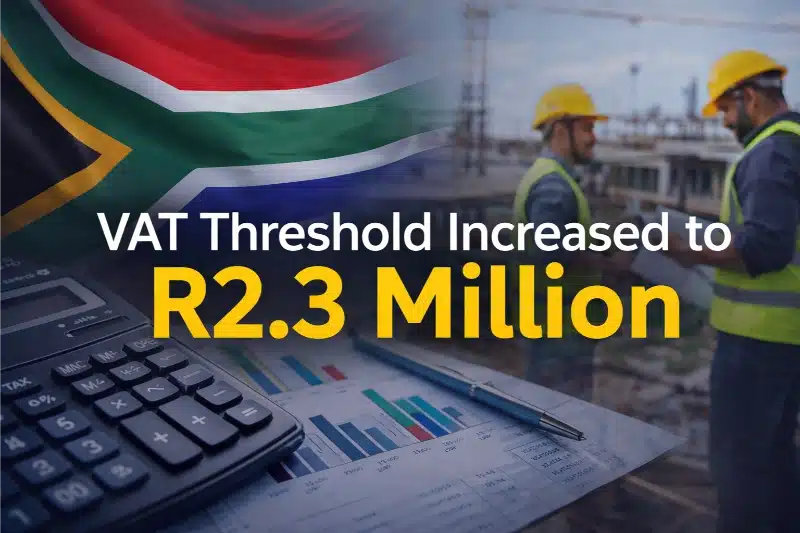
VAT Threshold Increased to R2.3 Million – What It Means for Growing Small Businesses in South Africa

The 2026/27 South African Budget introduced an important change for entrepreneurs and growing businesses. From 1 April 2026, the compulsory VAT registration threshold increases from R1 million to R2.3 million turnover over any 12-month period. For many small businesses, this provides much-needed breathing room before VAT registration becomes mandatory, reducing administrative pressure while businesses focus on growth.   What the New VAT Threshold Means – The increase in the VAT threshold is particularly positive for small and medium-sized businesses.   Benefits include: More time to grow before compulsory VAT registration• Reduced administrative pressure in early growth stages• Greater flexibility with pricing and cash flow• More time to establish proper accounting systems• Less risk of unexpected VAT compliance issues This change is especially beneficial for industries where turnover can increase quickly, such as: Construction and building contractors• Maintenance and trade businesses• Consulting and professional services• Small manufacturing and project-based businesses   Growth Can Happen Faster Than Expected One reality of running a successful business is that growth can happen very quickly once larger contracts start coming in. For example: A contractor may win a R1 million or R2 million construction contract A service business may secure multiple new clients in a short period A growing company may land a large corporate project Suddenly the business may find itself approaching the VAT threshold much sooner than expected. It is important to remember that VAT registration is triggered by turnover over any rolling 12-month period, not simply the financial year. Because of this, business owners should monitor turnover regularly throughout the year. Why Planning Ahead Matters – Although the higher VAT threshold reduces pressure, businesses should still plan ahead. VAT registration often requires adjustments to: Pricing structures Invoicing processes Accounting systems and software Cash flow planning SARS compliance procedures Registering late or failing to prepare properly can create unnecessary complications. With the right advice and planning, the transition into VAT can be smooth and manageable. How Smarter Accounting Helps Growing Businesses At Smarter Accounting, we work closely with small and growing businesses to ensure they are properly structured as they expand. We assist with: Monitoring turnover against VAT thresholds Preparing businesses for VAT registration Structuring pricing and invoicing correctly Setting up accounting systems and reporting Ensuring ongoing SARS compliance Many businesses only realise they are approaching the VAT threshold after securing a large contract. Professional guidance can help ensure your business remains compliant while continuing to grow confidently. A Positive Change for Entrepreneurs The increase in the VAT registration threshold to R2.3 million is a welcome development for South African entrepreneurs. It gives small businesses more time to grow and establish themselves before dealing with additional VAT compliance requirements. However, rapid growth can still bring new obligations. Monitoring turnover and planning ahead remains essential for sustainable business growth.   Need Advice on VAT Registration or Business Growth? If your business is expanding or securing larger contracts, it may be worth reviewing your VAT position. We can assist with: VAT registration planning Monitoring turnover thresholds Accounting systems for growing businesses Catching up on tax and compliance Structuring your business for long-term growth If you want this year to feel calmer and more controlled, let’s talk. 📞 WhatsApp: 082 061 2300📩 david@smarteraccounting.co.za🌐 www.smarteraccounting.co.za Smarter Accounting — Where Results Matter

VAT Threshold Increased to R2.3 Million – What It Means for Growing Small Businesses in South Africa Read More »

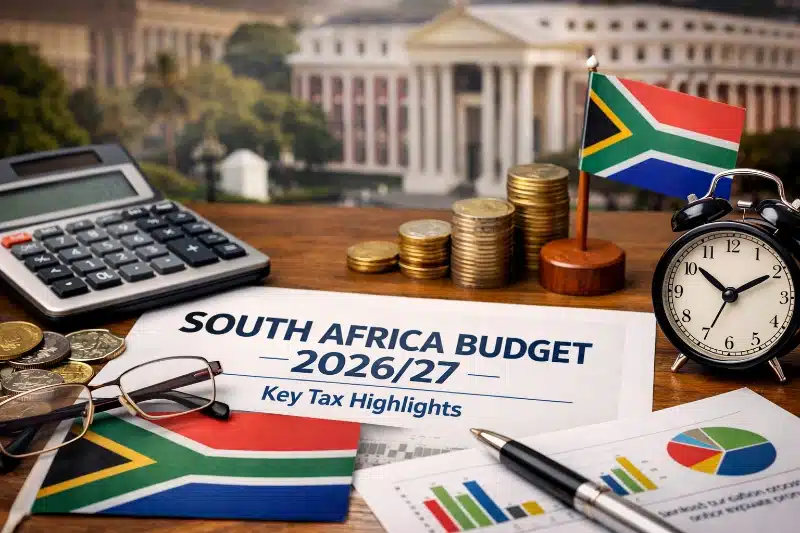
South Africa Budget 2026/27 – Key Tax Highlights for Businesses and Individuals

South Africa Budget 2026/27 – Key Tax Highlights for Businesses and Individuals The South African Budget for 2026/27 was recently presented and is expected to be approved by Parliament shortly. While the major tax rates remain largely unchanged, several important thresholds and adjustments have been introduced. For many businesses and taxpayers, it is often these smaller changes to thresholds and exemptions that have the biggest practical impact on cash flow, tax planning, and compliance. At Smarter Accounting, we have prepared a short summary to help business owners and individuals understand the key points.   Key Budget Highlights Some of the most relevant changes announced in the 2026/27 Budget include: VAT Registration Threshold Adjustments to the VAT registration threshold may affect when businesses are required to register for VAT. Turnover Tax Changes Updates to the Turnover Tax system aimed at supporting small businesses and micro-enterprises. Tax Rebates and Exemptions Changes to certain rebates and exemptions that may affect individual taxpayers and small businesses. Compliance and Reporting Continued focus by SARS on compliance, reporting accuracy, and closing the tax gap. What This Means for Business Owners For many small and medium-sized businesses, these updates create an opportunity to review: Whether VAT registration is required or beneficial Whether Turnover Tax or the standard tax system is more appropriate Whether current accounting systems and reporting processes are up to date Whether tax planning opportunities are being missed Taking the time to review these areas early in the financial year can help avoid unexpected tax liabilities and compliance issues later on.   Download the Full Budget Summary We have prepared a short brochure summarizing the key tax changes in the 2026/27 Budget. 📎 Download the full Budget Highlights Summary here: Click here Need Help Preparing for the New Tax Year? If you would like assistance with: Tax planning for the year ahead• Catching up on outstanding tax returns• Accounting and bookkeeping systems• Payroll and compliance requirements• Setting up financial systems for a new or growing business We would be happy to assist. Contact Smarter Accounting: If you want this year to feel calmer and more controlled, let’s talk. 📞 WhatsApp: 082 061 2300📩 Email: david@smarteraccounting.co.za🌐 Website: www.smarteraccounting.co.za Smarter Accounting — Where Results Matt

South Africa Budget 2026/27 – Key Tax Highlights for Businesses and Individuals Read More »

Falling behind on your books or tax returns? Here’s exactly how we get you back on track…

If you’re wondering “What happens if you owe SARS money?” or feeling that pit in your stomach every time you think about late tax returns, you’re not alone.  Many business owners start the year with good intentions, only for life (and business) to take over. Before you know it, you’ve got a backlog of receipts, unanswered SARS letters, and a missed tax deadline in South Africa that’s now costing you in penalties and interest. Here’s the reality: the longer you leave it, the messier (and more stressful) it gets. But here’s the good news — getting back on track is completely possible when you have the right plan and the right people in your corner.   Why Falling Behind Happens (and Why It’s Fixable) Being behind on bookkeeping or tax returns isn’t necessarily about carelessness. It often happens because: You’re busy running the business and client work comes first. You’ve had staff turnover, and the replacement bookkeeper hasn’t caught up yet. Illness, family emergencies, or major business changes pulled your attention away. You thought you’d “do it later” — and later never came. Whatever the reason, the solution is the same: a clear catch-up plan, quick turnaround, and someone who understands SARS rules inside and out. The Real Risks of Staying Behind If you’ve ever asked “Can I go to jail if I owe SARS money?” the answer is – in extreme cases of fraud or tax evasion, yes. But for most honest business owners, the bigger danger is unnecessary costs and stress: SARS penalties and interest — even small delays can add up. What is the penalty for late tax payment?Typically, SARS charges interest plus a percentage-based penalty. How is late payment penalty calculated? It’s based on the outstanding tax amount and the number of months overdue. Damaged business decision-making because your financial data is outdated. Missed deductions or credits due to late filing. SARS taking money directly from your account if you ignore final demands. “Does owing SARS affect credit score?” is a stressful. The answer is no but unpaid tax debt can lead to legal action that affects your finances. How We Help You Catch Up — Step by Step At Smarter Accounting, we’ve taken business owners from “years behind” to “fully SARS-compliant” in a matter of weeks. Here’s how: 1. We Assess the Situation We review what’s been done, what’s missing, and how far back we need to go. 2. We Build a Catch-Up Plan Whether you’re months or years behind, we create a realistic timeline to get you up to date without overwhelming you. 3. We Do the Heavy Lifting We process receipts, bank statements, invoices, payroll records, and prepare accurate books. 4. We File Your Returns We handle overdue provisional tax, VAT, PAYE, and income tax submissions — fast and compliant. If you’re wondering “What must I do if I owe SARS money?”, this is where we ensure you know exactly how much is due, negotiate payment plans if needed, and even explore whether SARS debt can be written off under certain hardship provisions. 5. We Keep You Up to Date Once you’re caught up, we set up a simple, ongoing system (often cloud-based) so you never fall behind again. Why Choose Us Instead of Doing It Yourself? You could spend weekends buried in receipts, but our clients hire us because: We work faster — this is our full-time focus. We know SARS processes and legislation. We find legitimate savings you might have missed. We keep you compliant so you avoid the maximum penalty for filing a late tax return and never need to ask, “What happens if I miss the tax deadline in South Africa?” again. Real-Life Example One client was 18 months behind on VAT and PAYE. Within three weeks, they were fully up to date, avoided additional penalties, and had a monthly process taking less than an hour to maintain. The Bottom Line If you’re behind, don’t wait until SARS sends a final demand or initiates a garnishee order on your bank account.  Can SARS just take money from your account? Yes, if you ignore repeated notices. The sooner you act, the easier (and cheaper) it is to fix the problem.  And if you’ve been asking yourself “Can SARS debt be written off?” or “What must I do if I owe SARS money?” — the first step is getting an accurate picture of your finances and a compliance plan. Stop stressing and start catching up with your tax issues today! Contact Smarter Accounting, and let’s clear the backlog so you can focus on growing your business instead of worrying about SARS. Call us for a free 15 minute consultation to get ready before SARS comes calling. +27 82 061 2300 info@smarteraccounting.co.za Contact Us

Falling behind on your books or tax returns? Here’s exactly how we get you back on track… Read More »